
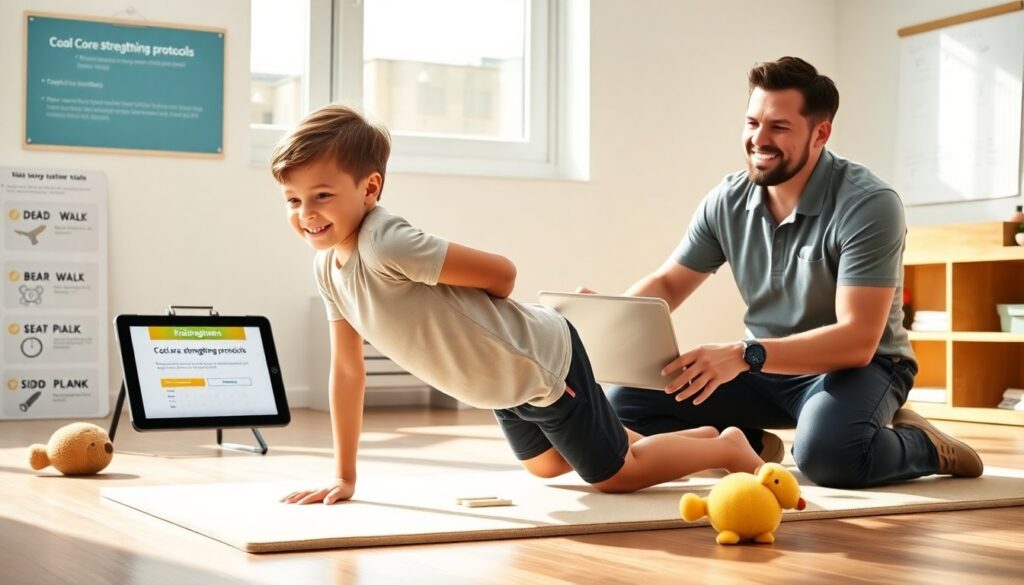
kidsregimen cool core strengthening protocols convoswithh introduces safe core work for children. The guide explains why core strength matters. It shows simple exercises adults can teach. It gives clear progression steps and ways to track results. It keeps children interested with short sessions and fun cues. It avoids complex jargon and stays practical for parents and teachers.
Key Takeaways
- The kidsregimen cool core strengthening protocols convoswithh offer safe, age-appropriate core exercises designed to improve children’s posture, balance, and confidence.
- Simple protocols like Dead Bug Basics, Bear Walks, Bridge Hold, and Side Plank with Knee Down keep sessions short, engaging, and easy for adults to guide.
- Progress is tracked through checklists, sticker charts, or videos, helping children see measurable improvement in as little as four to eight weeks.
- Adult supervision and slow progression ensure safety by avoiding pain, heavy resistance, or complex instructions.
- Involving caregivers and teachers promotes consistent practice and habit-building for better long-term core strength outcomes.
Why Core Strength Matters For Kids: Development, Posture, And Confidence
Core strength supports movement, balance, and posture in children. The core stabilizes the trunk so limbs move with control. A strong core reduces falls and improves coordination in play and sport. Teachers note better sitting posture when children use core muscles correctly. Parents report fewer complaints of back or hip pain after core work starts.
Core strength helps breathing and voice control. The diaphragm and abdominal muscles work with the core. Children who strengthen the core may gain clearer speech and calmer breathing during tests or performances. The core also supports fine motor tasks because it stabilizes the torso while hands work.
Core training can boost confidence. Successful, short exercises give children clear wins. That success builds willingness to try harder skills. Coaches see shy kids take more risks after a few weeks of structured core work.
The program name, kidsregimen cool core strengthening protocols convoswithh, focuses on safety and play. The protocol keeps sessions brief and age-appropriate. It avoids heavy loading and complex instructions. The guide emphasizes repetition, clear cues, and adult supervision. It aligns with pediatric exercise guidance and common-sense safety practices.
Simple, Safe Core Protocols You Can Do At Home Or In Class
Start with a quick screen. An adult observes basic posture and balance for 30 seconds. The screen looks for asymmetry, pain, or difficulty keeping balance. The adult adapts the protocol if any concern appears.
Protocol 1: Dead Bug Basics.
- Setup: Child lies on their back. Knees bend. Feet rest on the floor. Arms point to the ceiling.
- Action: Child lowers one arm and the opposite leg slowly. Child returns to start. Repeat five to ten times per side.
- Cue: Tell the child to keep the belly button pointing toward the spine.
Protocol 2: Bear Walks.
- Setup: Child starts on hands and toes, hips low.
- Action: Child walks forward on hands and feet for 10 to 20 steps. Child rests and repeats twice.
- Cue: Tell the child to pretend they carry a small book on their back.
Protocol 3: Bridge Hold.
- Setup: Child lies on back with knees bent.
- Action: Child lifts hips until a straight line forms from shoulders to knees. Child holds for 5 to 15 seconds. Repeat three to five times.
- Cue: Ask the child to squeeze the hips like holding a small ball.
Protocol 4: Side Plank with Knee Down.
- Setup: Child lies on one side with elbow under shoulder and bottom knee bent.
- Action: Child lifts hips and holds for 5 to 12 seconds. Repeat two to three times per side.
- Cue: Say, “Make a strong straight line from head to knee.”
Session design: Keep sessions to 8 to 12 minutes for ages 4 to 8 and 12 to 18 minutes for ages 9 to 12. Use clear, consistent language. Praise effort and form. Use the program name, kidsregimen cool core strengthening protocols convoswithh, as a short fun label to help children remember the routine.
Safety notes: Adults supervise every set. Adults stop any exercise that causes pain. Adults avoid heavy resistance or long static holds for young children. Progress slowly and keep play as the core of the session.
How To Progress, Track Results, And Keep Kids Engaged
Progress in small steps. Increase repetitions, hold times, or step length every one to two weeks. Add a new movement only after the child shows consistent good form. The adult documents the change and the date.
Tracking options: Use a simple checklist, a sticker chart, or a short video. The checklist lists each protocol and counts completed sets. The sticker chart awards one sticker per session. The short video records form once every two weeks for comparison.
Measure outcomes with simple tests. Use a timed plank for baseline and follow-up. Use a balance test where the child stands on one foot for as long as possible. Use a posture photo to compare sitting alignment over four weeks. Record the numbers and show the child the improvement.
Keep children engaged with variety and choice. Offer two or three movement options and let the child pick one. Turn some sets into short games, such as counting breaths during a bridge hold or racing a soft toy while bear walking. Use music and brief challenges to maintain energy.
Use language that motivates. Praise effort, not just results. Say, “You tried hard and kept your belly tight.” Give specific feedback like, “Your shoulders stayed low today.”
Involve caregivers and teachers. Share the simple checklist or the program name, kidsregimen cool core strengthening protocols convoswithh, so adults can keep consistency across settings. Encourage short daily practice rather than long occasional sessions. Consistent practice builds habit and improves outcomes.
Data and timing: Expect measurable changes in four to eight weeks with regular practice. Young children show quicker gains in balance and posture. Older children can add more challenge and track strength improvements with timed holds and repetition counts.
Troubleshooting: If progress stalls, review form, reduce complexity, and add more frequent short sessions. If pain appears, stop and seek professional advice. Adults adjust based on the child’s response and keep activities safe and fun.