
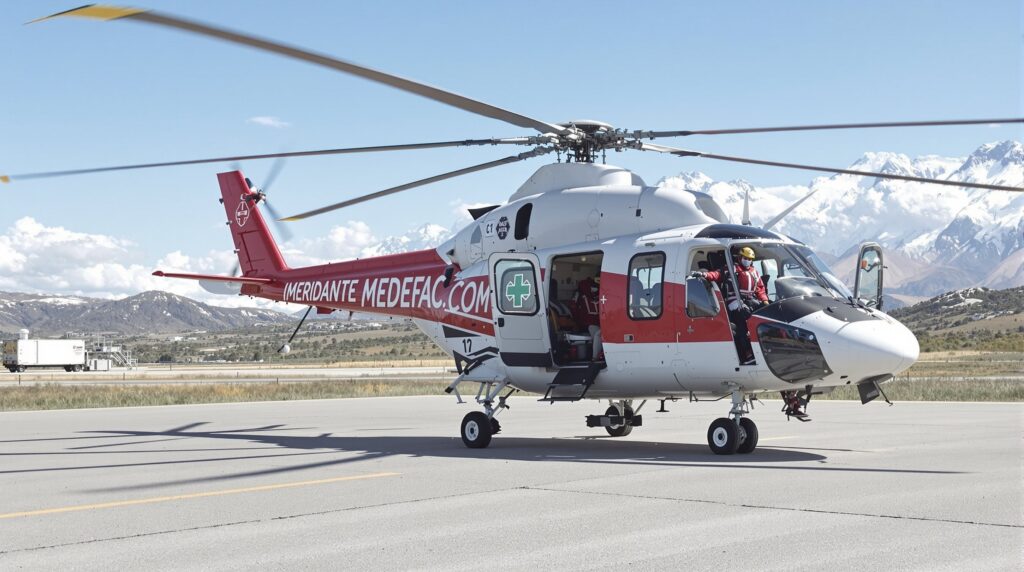
CWHHTR emergency tips immediate medevac must appear in the first steps after a crash or severe injury. The team should act fast and clear tasks. They should check safety, stop major bleeding, and call for air evacuation. They should share exact location and patient status. This list shows direct actions for the first ten minutes to improve survival and speed medevac response.
Key Takeaways
- Immediate medevac response requires quick safety assessment, stopping major bleeding, and calling for air evacuation with exact location and patient status.
- Perform a rapid primary survey focusing on airway, breathing, and circulation, and control severe bleeding using direct pressure or tourniquets.
- Stabilize the patient for air evacuation by securing airway and spine, controlling hemorrhage, and preparing for safe transfer to the aircraft.
- Coordinate closely with medevac teams by providing clear patient information, exact location, landing zone details, and maintaining a single communication point.
- Document all treatments, vital signs, and times accurately to pass on to flight medics, and follow flight crew instructions during patient loading and helicopter approach.
Assess The Scene And Prioritize Safety
The responder should scan the scene for hazards. They should look for fire, fuel leaks, downed power lines, and unstable wreckage. The responder should move bystanders to a safe distance. They should keep the patient where they lie unless danger threatens life.
The responder should perform a rapid primary survey. They should check airway, breathing, and circulation in that order. They should open the airway and clear visible obstructions. They should give two rescue breaths only when breathing stops. They should check for a pulse and major bleeding at the same time.
The responder should stop major bleeding before other care. They should apply direct pressure and use a tourniquet for limb hemorrhage when direct pressure fails. They should expose the wound and pack it if needed. They should secure the tourniquet high and note the application time.
The responder should wear gloves and use basic protective gear when possible. They should avoid contact with blood and bodily fluids. They should cover the patient with a blanket to prevent heat loss. They should position the patient to keep the airway open and to limit further injury while awaiting medevac.
The responder should assign roles quickly if others are present. They should name one person to call for medevac, one to control bleeding, and one to maintain airway and monitor breathing. They should keep tasks simple and repeat instructions aloud. They should prepare the patient for removal from the scene only when the aircrew or extraction team advises or when the scene remains unsafe.
Stabilize The Patient For Air Evacuation
The team should stabilize the patient with the goal of safe transfer to the helicopter or fixed-wing aircraft. They should follow a clear order: airway, breathing, circulation, spine control, and hemorrhage control. They should secure the airway with a jaw thrust when spinal injury is possible. They should confirm breathing with chest rise and pulse oximetry if available.
The team should immobilize the spine when spinal injury is suspected. They should use a cervical collar and backboard or vacuum mattress. They should pad under the head and secure straps to prevent movement. They should avoid unnecessary motion while moving the patient into the aircraft.
The team should control bleeding with dressings and tourniquets. They should place dressings over wounds and keep them secure during movement. They should recheck distal pulses and limb perfusion after tourniquet placement. They should record the time of tourniquet application on the patient’s forehead or on a tag.
The team should secure intravenous access for fluids and medications when trained personnel are present. They should use warmed fluids if the patient shows signs of shock or hypothermia. They should attach monitoring equipment and note vital signs at regular intervals. They should prepare necessary airway and resuscitation equipment for use during flight.
The team should ready the patient for stretcher transfer. They should remove bulky clothing and immobilize limbs with splints when fractures exist. They should pad pressure points and secure the patient with straps. They should cover the patient to maintain body temperature and offer reassurance to reduce panic. They should keep communication with the flight crew about patient stability and special needs.
Coordinate With Medevac Teams And Communicate Critical Information
The leader should call medevac as soon as possible. They should give a clear, concise report. They should state the patient count and the nature of injuries. They should include airway status, breathing quality, and circulation problems.
The leader should give the exact location with grid coordinates, GPS, or a landmark. They should describe the landing zone type and any hazards nearby. They should report wind direction, slope, and space available for the helicopter. They should clear the landing area and mark it with visible signals when safe.
The leader should use standard medevac formats when possible. They should provide patient age, mechanism of injury, and level of consciousness. They should list vital signs, major interventions applied, and time of tourniquet use. They should mention known allergies and medications if available.
The leader should confirm arrival time and approach path with the flight crew. They should ask the crew about required landing zone size and approach side. They should verify whether the crew will load patients on-site or if ground transfer is needed. They should prepare to brief the flight medic quickly on board.
The leader should maintain a single point of contact for communications. They should use plain language and avoid unnecessary details. They should repeat critical items aloud to confirm accuracy. They should keep all radios and devices on channel and volume that the flight crew uses.
The leader should document actions and times while waiting for medevac. They should note treatment times, medication times, and changes in vital signs. They should pass the documentation to the flight medic at transfer. They should give the flight medic a quick verbal summary and then step back to allow the crew to manage the patient.
The leader should follow the flight crew’s directions during loading. They should secure loose items and clear the area. They should stand well clear of rotor wash and avoid the tail rotor. They should keep bystanders away and keep a firm perimeter until the aircraft departs.